你好
nǐ hǎo
hello
你好!我叫安娜。
Nǐ hǎo! Wǒ jiào Ānnà.
Hello! My name is Anna.
Structured Chinese writing workbooks with HSK vocabulary, stroke order diagrams, example sentences, translations, and handwriting grids.
Based on the new HSK 3.0 vocabulary scope.
HSK is the standardized Chinese proficiency system used by learners around the world. Each level introduces a growing set of vocabulary, characters, and language skills.
HSK scores serve several practical purposes beyond personal study:
The new HSK 3.0 structure expands the vocabulary scope and gives learners a clearer progression from beginner to advanced Chinese. It consists of 9 levels in total. These workbooks are built around the new level-by-level vocabulary scope.
Writing Chinese characters helps you slow down, notice structure, and remember vocabulary more deeply. Instead of only recognizing words on screen, you practice their shape, stroke order, and meaning.
Writing helps you see the parts and proportions of each character.
Practice words in context instead of memorizing isolated characters.
Use diagrams and guided grids to build confident handwriting habits.
Read the word, understand it in context, then practice writing it by hand.
你好
nǐ hǎo
hello
你好!我叫安娜。
Nǐ hǎo! Wǒ jiào Ānnà.
Hello! My name is Anna.
谢谢
xièxie
thank you
谢谢你的茶。
Xièxie nǐ de chá.
Thank you for the tea.
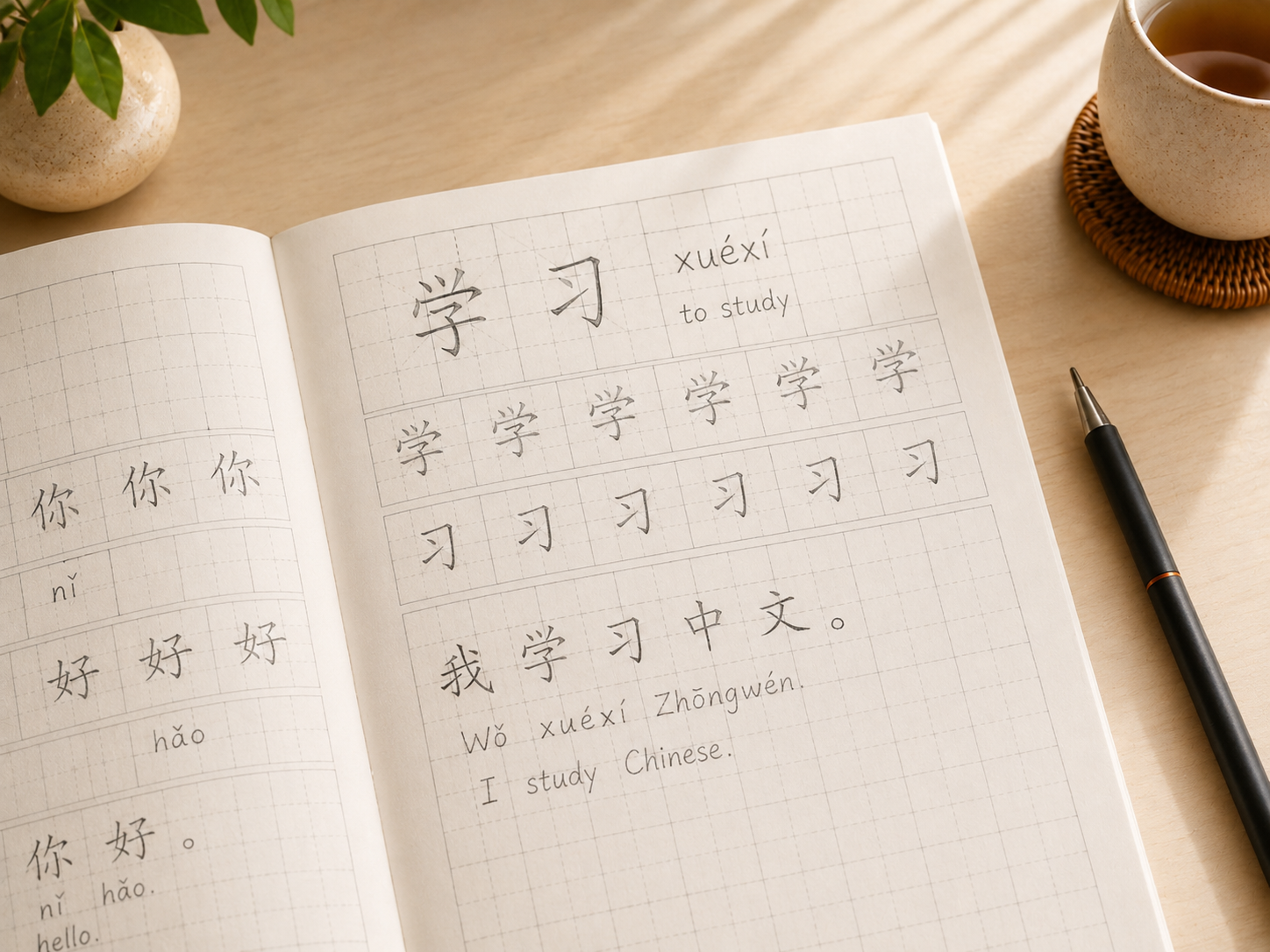
学习
xuéxí
to study
我学习中文。
Wǒ xuéxí Zhōngwén.
I study Chinese.
老师
lǎoshī
teacher
我的老师是中国人。
Wǒ de lǎoshī shì Zhōngguó rén.
My teacher is Chinese.
吃
chī
to eat
我们中午吃米饭。
Wǒmen zhōngwǔ chī mǐfàn.
We eat rice at noon.
水
shuǐ
water
请给我一杯水。
Qǐng gěi wǒ yì bēi shuǐ.
Please give me a glass of water.
Start with your current HSK level and practice the vocabulary introduced at that stage.
Choose your workbook language edition:
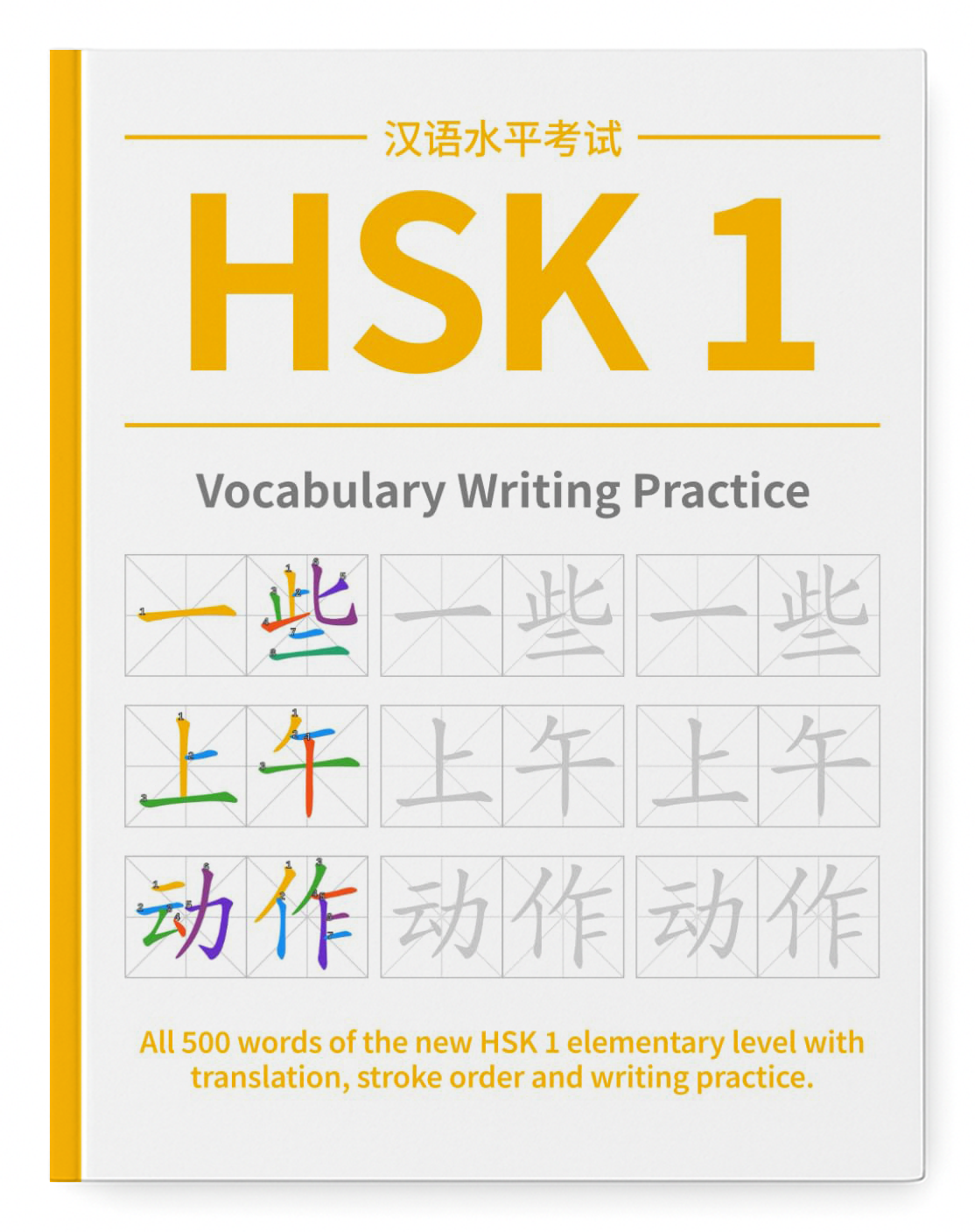
Beginner · 500 words
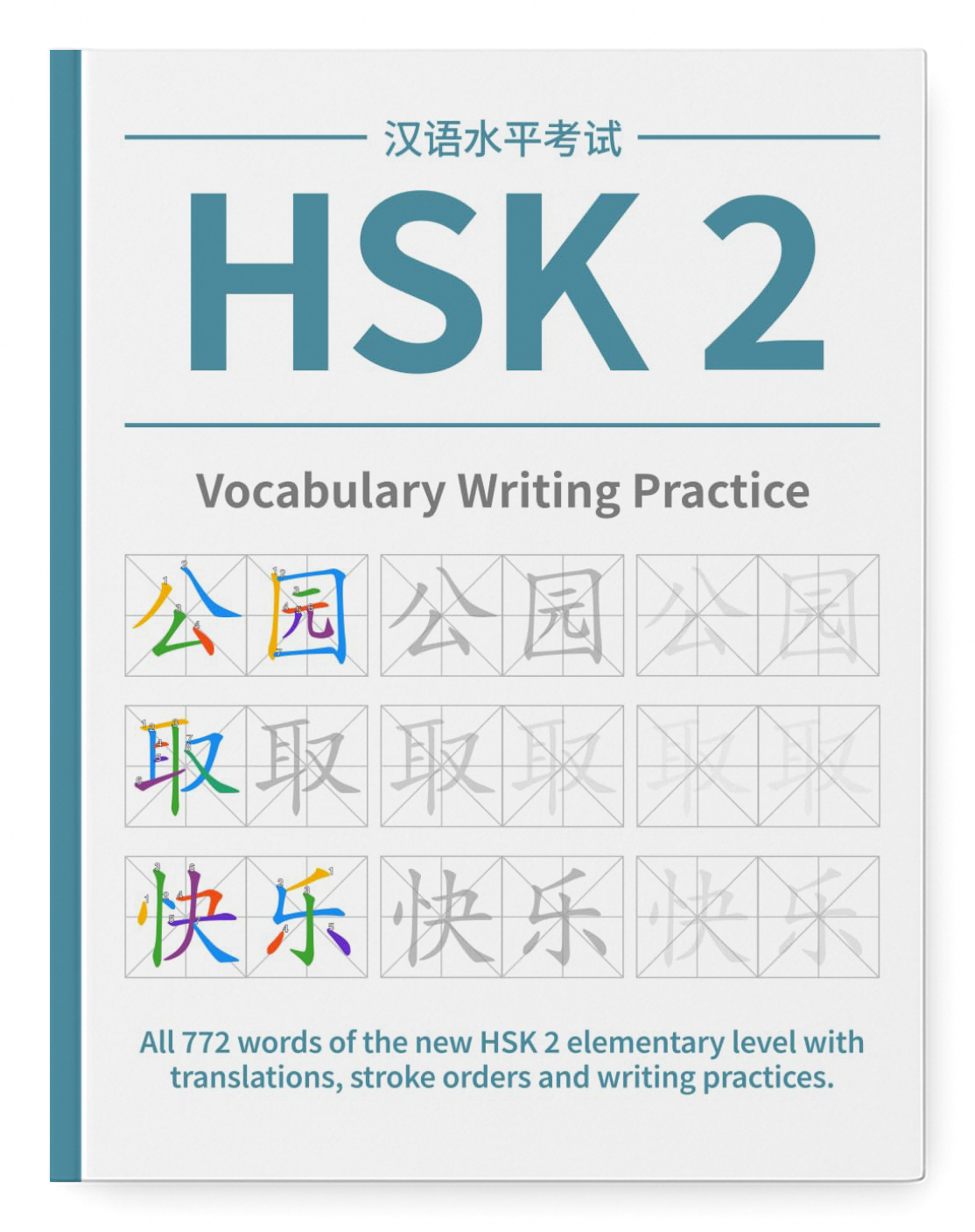
Beginner · 772 words
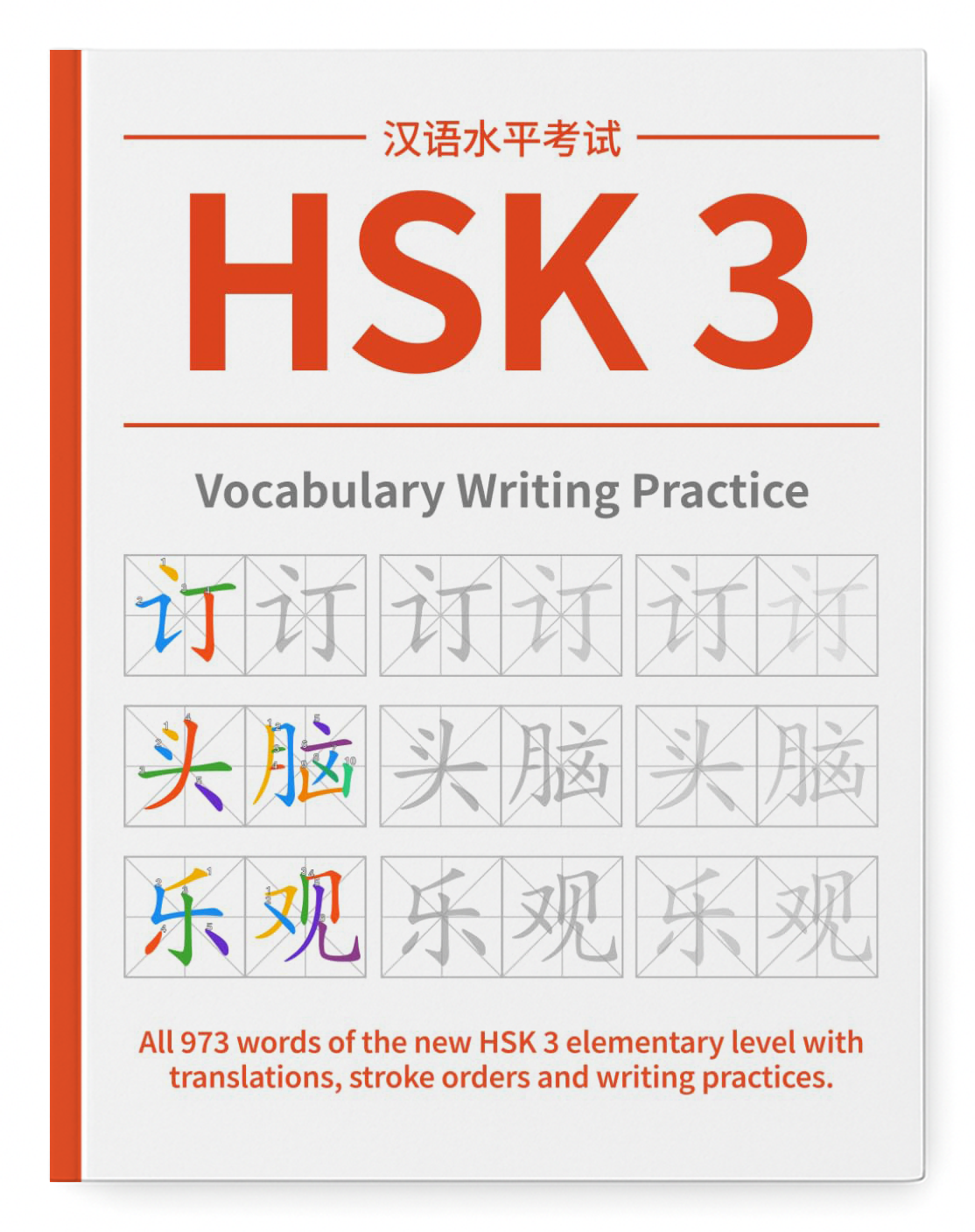
Intermediate · 973 words
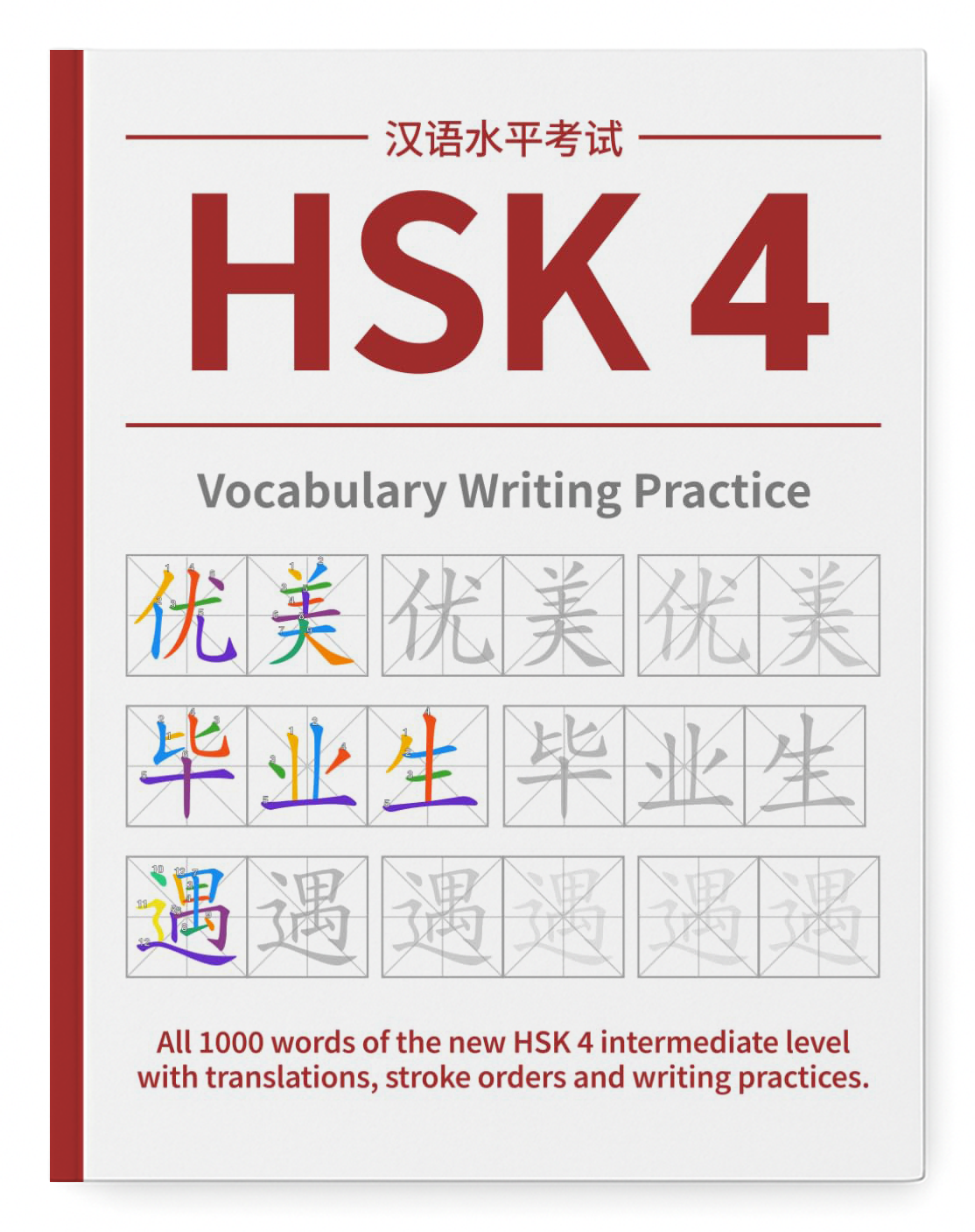
Intermediate · 1,000 words
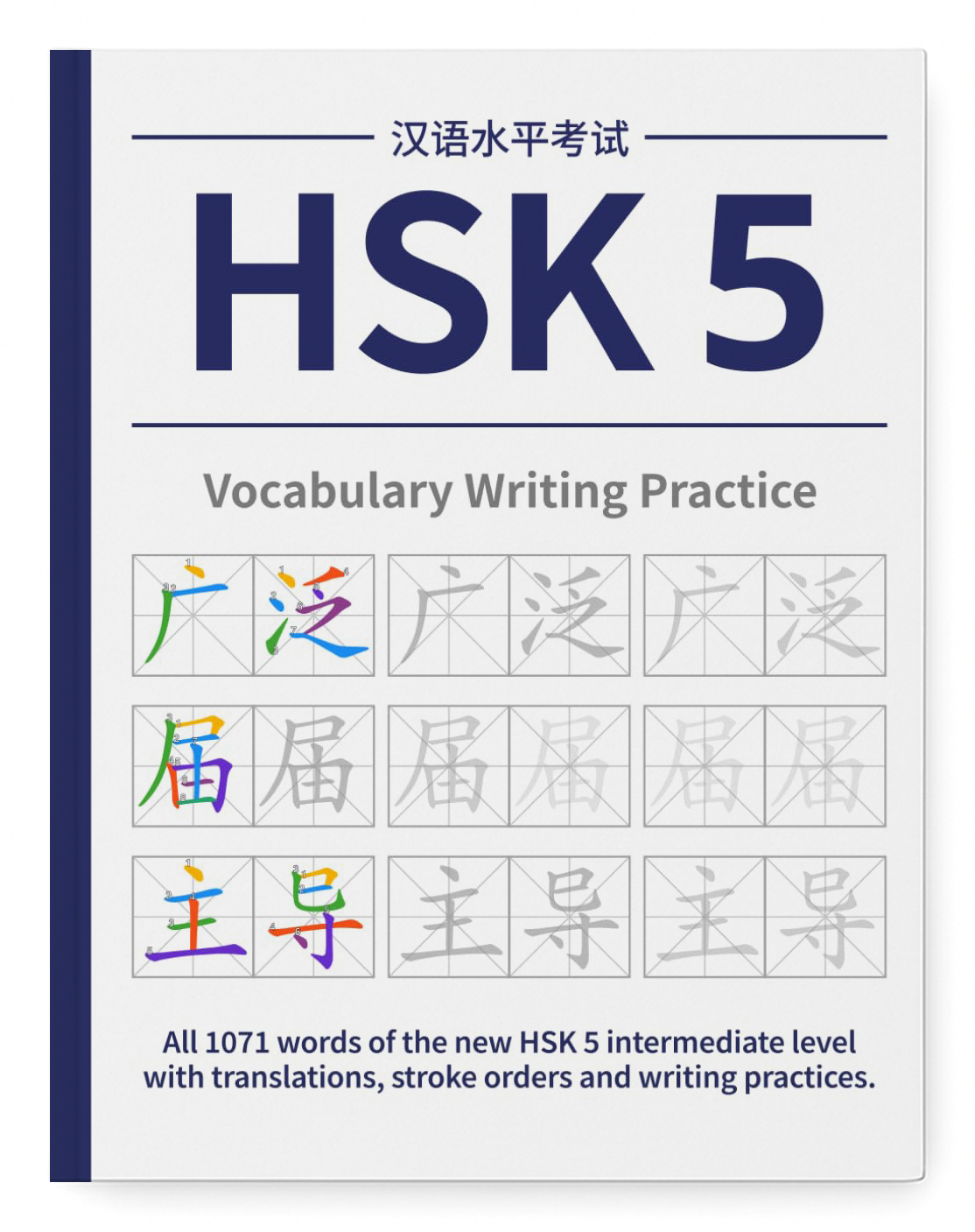
Advanced · 1,071 words
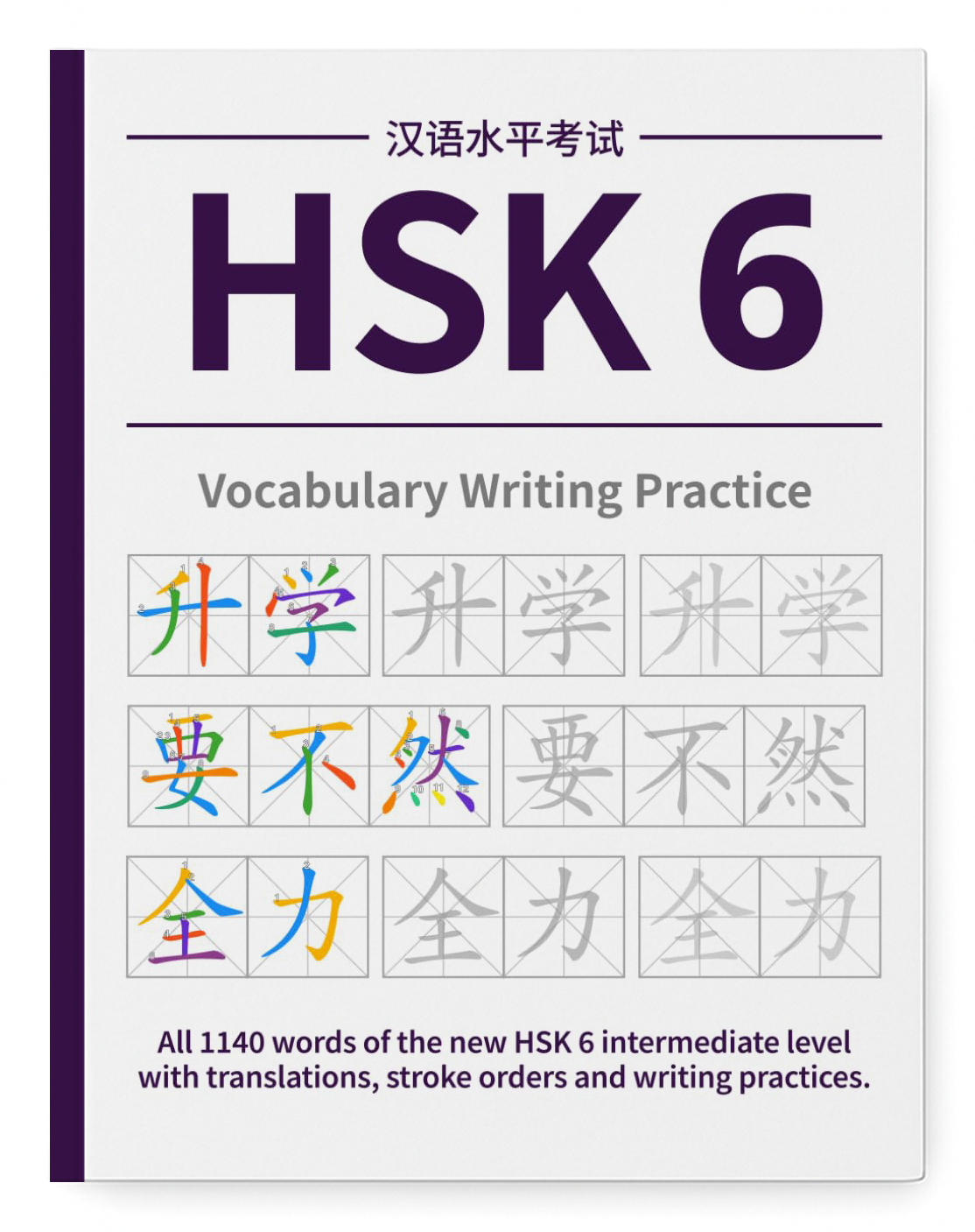
Advanced · 1,140 words
If you want to go beyond copying and understand how Chinese characters are built, visit Hanzi Made Simple for visual explanations of radicals, components, memory hooks, and character logic.
Explore Hanzi Made SimpleNot ready to buy?
Download sample pages, blank writing grids, and beginner-friendly practice resources before choosing a workbook.
Get Free Downloads